骨折是日常生活中常见的伤害。作为骨折治疗的核心医疗器械,骨板通过手术固定在骨头上,配合螺钉,作为内部夹板,为骨折愈合提供关键支撑。它可以稳定各种损伤,从简单的横断骨折到复杂的粉碎性骨折,并帮助患者及早恢复活动,加快康复进程。本文将详细介绍骨板的核心功能、常见类型、材料选择及临床应用,帮助您全面理解这一重要的骨科设备。
一、骨板的核心功能:保护骨折愈合
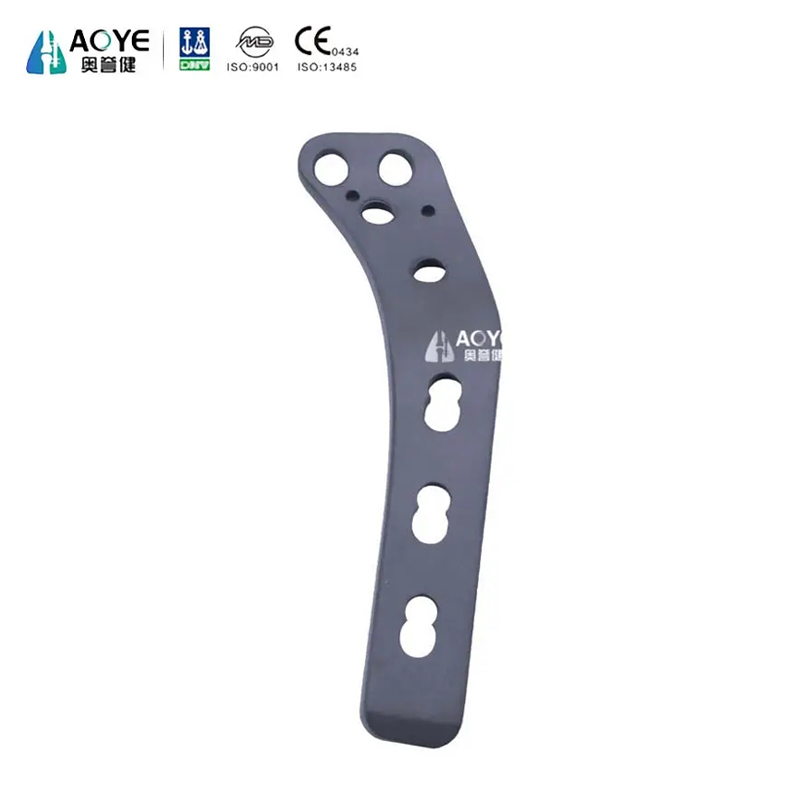
骨板巧妙地设计以适应骨骼的生理结构,椭圆形螺丝孔是关键部件——它可以通过动态压缩将骨片紧密拉近,消除碎片间不必要的移动。这种压缩效果对骨折愈合至关重要:当骨片稳定排列时,血液供应更容易恢复,骨细胞增生更快,从而促进初级骨愈合并缩短康复周期。
二、常见的骨板类型:根据需求选择合适的方案
骨板根据其设计、功能和适用场景分为多种类型,最常见的两种是:
1. 动态压缩板(DCP)
The core feature of a dynamic compression plate is its elliptical screw holes. During surgery, the surgeon places the screw eccentrically in the hole; when the screw is tightened, it moves along the trajectory of the elliptical hole, thus pulling the bone fragments together and generating continuous compression force at the fracture site. This design is suitable for most simple fractures and can effectively promote fragment healing.
2. Locking Compression Plate (LCP)
The screw holes of a locking compression plate are threaded, and the screw will lock onto the plate after being screwed in, forming a fixed-angle stable structure. The advantage of this design is higher stability: it can provide reliable support even for patients with poor bone quality (such as those with osteoporosis) or complex fracture patterns (such as comminuted fractures), avoiding the loosening problem that may occur with traditional compression methods.
III. Main Materials of Bone Plates: Balancing Strength, Safety and Comfort
The material of a bone plate directly affects its performance and patient experience. Currently, there are three mainstream materials:
1. Titanium Alloy
Titanium alloy is the mainstream choice in the current market, because it is high in strength and light in weight, and can bond well with human bone (i.e., osseointegration), reducing rejection reactions. In addition, titanium alloy has good biocompatibility, is less likely to cause complications after long-term implantation, and is suitable for most adult patients.
2. Stainless Steel
The advantage of stainless steel bone plates is their low cost, but they are prone to corrosion. Long-term implantation may lead to the release of metal ions, so their application is gradually decreasing, and they are mostly used for short-term fixation or in scenarios with limited economic conditions.
3. Bioabsorbable Polymer
The biggest feature of this type of material is that it can gradually degrade — as the fracture heals, the bone plate will be slowly absorbed by the human body, eliminating the need for a secondary surgery to remove it. This is particularly friendly to pediatric patients, as it can avoid growth plate injury and the pain of subsequent plate removal surgery, making it an important choice in pediatric orthopedics.
IV. Clinical Applications of Bone Plates: Covering Fracture Treatment in Multiple Scenarios
Bone plates have a very wide range of applications, covering almost all orthopedic scenarios requiring bone stabilization:
1. Trauma and Acute Fractures
For fractures of long bones such as the femur, tibia and humerus, as well as complex fractures in the clavicle, pelvis and other parts, bone plates can provide precise stabilization, help patients get out of bed early, and reduce complications from long-term bed rest (such as thrombosis and muscle atrophy).
2. Spinal Stabilization
For spinal trauma, tumor resection or degenerative diseases (such as lumbar disc herniation), surgeons use customized cervical plates and thoracolumbar plates to fix the injured spinal segments, prevent nerve compression, and promote the recovery of spinal function.
3. Reconstructive Surgery
In limb-salvage surgery after tumor resection, customized bone plates are often used in combination with bone grafting to help restore the shape and function of the bone, allowing patients to retain as much limb mobility as possible.
4. Pediatric Orthopedics
Since children's bones are in a growth stage, bioabsorbable bone plates can avoid the interference of traditional metal plates on growth plates, and do not require secondary surgery for removal, greatly reducing the pain and risk for pediatric patients.
V. Development Trend of Bone Plates: From Standardization to Personalization
From early simple metal plates to today's locking systems and bioabsorbable materials, the development of bone plates has always relied on innovations in materials science and surgical technology. In the future, with the advancement of 3D printing and personalized medicine, bone plates will fit the bone shape of patients more closely, and can even be tailor-made according to the fracture type, further reducing complications and improving the treatment outcomes for patients worldwide.
As a reliable assistant in fracture treatment, the continuous upgrading of the design and materials of bone plates is making fracture rehabilitation more efficient and safer. If you or a family member faces a fracture problem, understanding the basic knowledge of bone plates can help you communicate better with doctors and choose the most suitable treatment plan.