Sudoku: A Timeless Puzzle for Every Skill Level
Sudoku is one of the most popular logic puzzle games in the world. It offers a unique combination of entertainment, concentration, and mental exercise. Unlike many puzzle games that depend on vocabulary or general knowledge, Sudoku relies entirely on logic. This simple concept has helped Sudoku attract millions of players across different age groups and cultures.
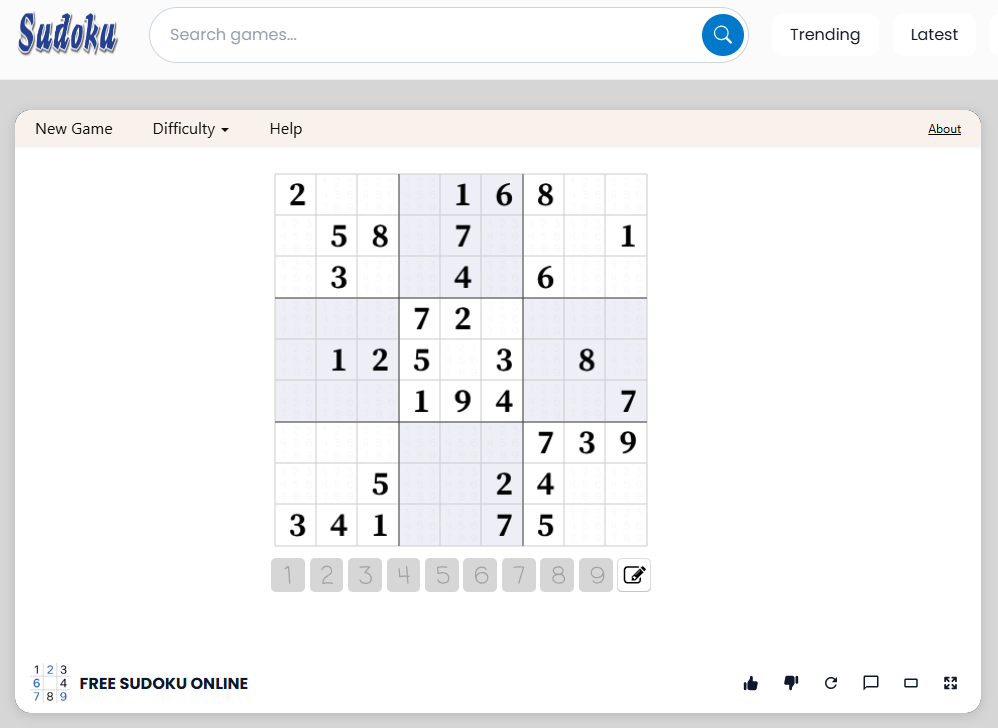
The standard Sudoku grid consists of nine rows and nine columns, creating eighty-one cells. The goal is to fill every empty cell with numbers from one to nine. Each number can appear only once in every row, column, and three-by-three section. While the rules are easy to understand, completing a puzzle often requires patience, focus, and strategic thinking.
Sudoku remains a favorite choice for people who enjoy solving challenges while keeping their minds active. Whether played in newspapers, books, mobile applications, or online platforms, Sudoku continues to provide a rewarding experience.
Why Sudoku Remains Popular Around the World
The lasting success of Sudoku comes from its accessibility and universal appeal. Anyone can learn the basic rules within a few minutes, yet mastering advanced puzzles can take years of practice.
Simple Rules Create Deep Challenges
Many puzzle games require players to learn complex mechanics before they can begin. Sudoku takes a different approach. The rules are straightforward, making it easy for beginners to start immediately.
As difficulty levels increase, players encounter more complex patterns and logical relationships. This progression keeps the experience fresh and engaging, even for experienced puzzle enthusiasts.
Suitable for All Ages
Sudoku appeals to children, adults, and seniors alike. Young players can improve concentration and number recognition, while adults often use Sudoku as a relaxing mental workout. Older players may enjoy the challenge as a way to keep cognitive skills active and engaged.
The versatility of Sudoku allows families and friends to enjoy the same activity regardless of age or background.
How Sudoku Improves Logical Thinking
One of the main reasons people return to Sudoku is the mental stimulation it provides. Every puzzle requires careful observation and structured reasoning.
Pattern Recognition Skills
Successful Sudoku players learn to identify patterns within rows, columns, and sections. Recognizing these patterns helps eliminate impossible choices and narrow down potential solutions.
Regular practice strengthens the ability to analyze information efficiently. These skills can also support problem-solving in daily life and professional environments.
Better Concentration and Focus
Completing a Sudoku puzzle often requires sustained attention. Players must track multiple possibilities while avoiding mistakes. This process encourages deeper concentration and improved focus over time.
Many people use Sudoku as a productive break from busy schedules because it provides a clear mental challenge without unnecessary distractions.
Strategic Decision Making
Every move in Sudoku affects future possibilities. Players frequently evaluate different options before selecting the most logical placement. This habit of analyzing outcomes promotes strategic thinking and careful decision making.
Different Difficulty Levels in Sudoku
One of the greatest strengths of Sudoku is the wide variety of difficulty settings available to players.
Beginner Puzzles
Beginner Sudoku puzzles contain more prefilled numbers, making it easier to identify solutions. These puzzles help new players understand fundamental techniques and build confidence.
Early success encourages continued practice and gradual improvement.
Intermediate Challenges
Intermediate puzzles introduce more complexity by reducing the number of starting clues. Players must rely on deeper analysis and more advanced logic.
This level serves as an excellent bridge between basic gameplay and expert challenges.
Expert and Extreme Levels
Expert Sudoku puzzles often require sophisticated solving methods. Players may need to evaluate multiple possibilities and uncover hidden relationships within the grid.
These demanding puzzles attract enthusiasts who enjoy testing the limits of their logical abilities.
Effective Strategies for Solving Sudoku
Improvement in Sudoku comes from practice and the development of reliable techniques.
Start With Obvious Numbers
A common strategy involves identifying rows, columns, or sections that are nearly complete. Filling these cells first creates momentum and reveals additional opportunities elsewhere in the puzzle.
This method helps establish a strong foundation for further progress.
Use Elimination Techniques
Elimination is one of the most important skills in Sudoku. By determining which numbers cannot occupy a specific cell, players gradually narrow the possibilities until the correct answer becomes clear.
Consistent use of elimination reduces errors and increases solving efficiency.
Scan the Entire Grid Regularly
Many players focus too heavily on a single section. Successful Sudoku solving often requires examining the entire grid repeatedly.
A fresh perspective can reveal opportunities that were previously overlooked. Regular scanning helps maintain awareness of the puzzle as a whole.
Digital Sudoku and Modern Accessibility
Technology has expanded access to Sudoku more than ever before. Players can now enjoy thousands of puzzles across multiple devices.
Mobile Applications
Sudoku applications provide instant access to puzzles of varying difficulty levels. Features such as hints, progress tracking, and daily challenges create an engaging experience for both beginners and experts.
Mobile accessibility allows players to enjoy Sudoku during travel, breaks, or leisure time.
Online Sudoku Platforms
Web-based Sudoku platforms offer endless puzzle collections and competitive features. Many websites include leaderboards, timed challenges, and personalized statistics.
These interactive elements add excitement while preserving the core logic-based gameplay.
Offline and Printable Options
Traditional Sudoku books and printable puzzles remain popular among players who prefer a screen-free experience. Physical puzzles offer convenience and can be completed anywhere without internet access.
The availability of both digital and offline formats contributes to the widespread appeal of Sudoku.
The Enduring Appeal of Sudoku
Sudoku continues to thrive because it combines simplicity, challenge, and intellectual satisfaction. The puzzle requires no special equipment, advanced mathematical knowledge, or extensive preparation. A single grid can provide minutes or even hours of engaging mental exercise.
Regular Sudoku practice can strengthen concentration, improve logical reasoning, and encourage strategic thinking. From casual players seeking relaxation to dedicated enthusiasts pursuing difficult challenges, Sudoku offers something valuable for everyone.
As technology evolves and new puzzle formats emerge, Sudoku remains a trusted favorite in the world of brain games. Its timeless design and rewarding gameplay ensure that Sudoku will continue to entertain and challenge players for generations to come.