For decades, the Diablo franchise occupied a unique space in the multiplayer landscape. It was a series that could be played entirely solo, yet its most memorable moments often occurred in the company of others. Diablo 2 popularized the concept of public farming games and Baal runs, creating spontaneous communities around shared objectives. Diablo 3 expanded matchmaking but maintained a primarily instanced, small-group focus. Diablo 4 represents a fundamental shift in this social equation, transforming Sanctuary from a collection of private instances into a persistent, shared world where encounters with other players are not occasional novelties but a constant presence. This evolution has redefined how players interact, cooperate, and form communities within the game.
The most visible change is the open world itself. As players travel through the five regions of Sanctuary, they encounter other players engaged in their own activities. These chance meetings create organic social moments that were impossible in previous entries. A player struggling with a stronghold might find assistance from a passing adventurer. A group gathered at a World Boss spawn point shares strategies and buffs before the encounter begins. The world feels inhabited, and even players who prefer solo play cannot escape the sense that they are part of a larger community. This design choice deliberately echoes the shared worlds of massively multiplayer online games, applying the scale of that genre to the action RPG framework.
World events and public activities serve as the primary catalysts for spontaneous cooperation. Legion Events summon players to designated locations for wave-based combat against demonic forces, with participation rewards scaling to the number of contributors. World Bosses, appearing on scheduled timers, require groups of a dozen or more players to coordinate positioning, damage output, and survival strategies. These encounters are designed to be difficult enough that solo completion is impossible, forcing cooperation even among strangers. The shared victory, followed by the collective rush to collect loot, creates fleeting but genuine social bonds that persist through friend requests and clan invitations.
The clan system in Diablo 4 provides a more structured framework for community building. Clans offer shared chat channels, banners that display in social spaces, and weekly rewards for collective participation. For many players, clans have become the primary way to organize endgame activities, from Nightmare Dungeon rotations to seasonal progression. The clan interface integrates seamlessly with the open world, allowing members to see each other’s locations and join activities without cumbersome invite systems. This infrastructure supports both casual social groups and competitive communities focused on leaderboard rankings and seasonal achievements.
The social experience in Diablo 4 extends beyond direct interaction. The shared economy, facilitated by third-party trading platforms, creates a community of merchants and collectors who interact through negotiation and reputation. The seasonal structure resets the social landscape every three months, bringing lapsed players back into the fold and creating common goals that transcend individual progression. Global chat channels, while optional, provide a constant stream of LFG requests, trade offers, and community discussion that makes the world feel alive even when standing idle in a town.
Criticism of the social systems in Diablo 4 has focused on the lack of robust tools for coordination. The game offers no built-in matchmaking for the highest-tier endgame activities, forcing players to rely on external platforms or clan networks to form groups. The open world’s population caps can make some zones feel underpopulated during off-peak hours, while others become crowded to the point of performance issues. Blizzard has responded to these concerns with incremental improvements, adding party finder functionality and adjusting server populations to balance activity levels.
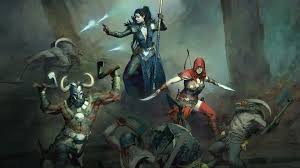
Ultimately, the social evolution represented by Diablo S12 Items
reflects a broader trend in the gaming industry toward persistent, shared worlds. It sacrifices some of the privacy and control of fully instanced gameplay in exchange for a sense of scale and community that previous entries could not replicate. For players who value the ability to play entirely alone, this shift may feel intrusive. For those who have always believed that Diablo is best experienced with others, the open world of Diablo 4 offers a vision of Sanctuary that finally realizes the franchise’s full social potential. The demons of Hell have always been best faced together, and now the game itself ensures that no one must face them alone.